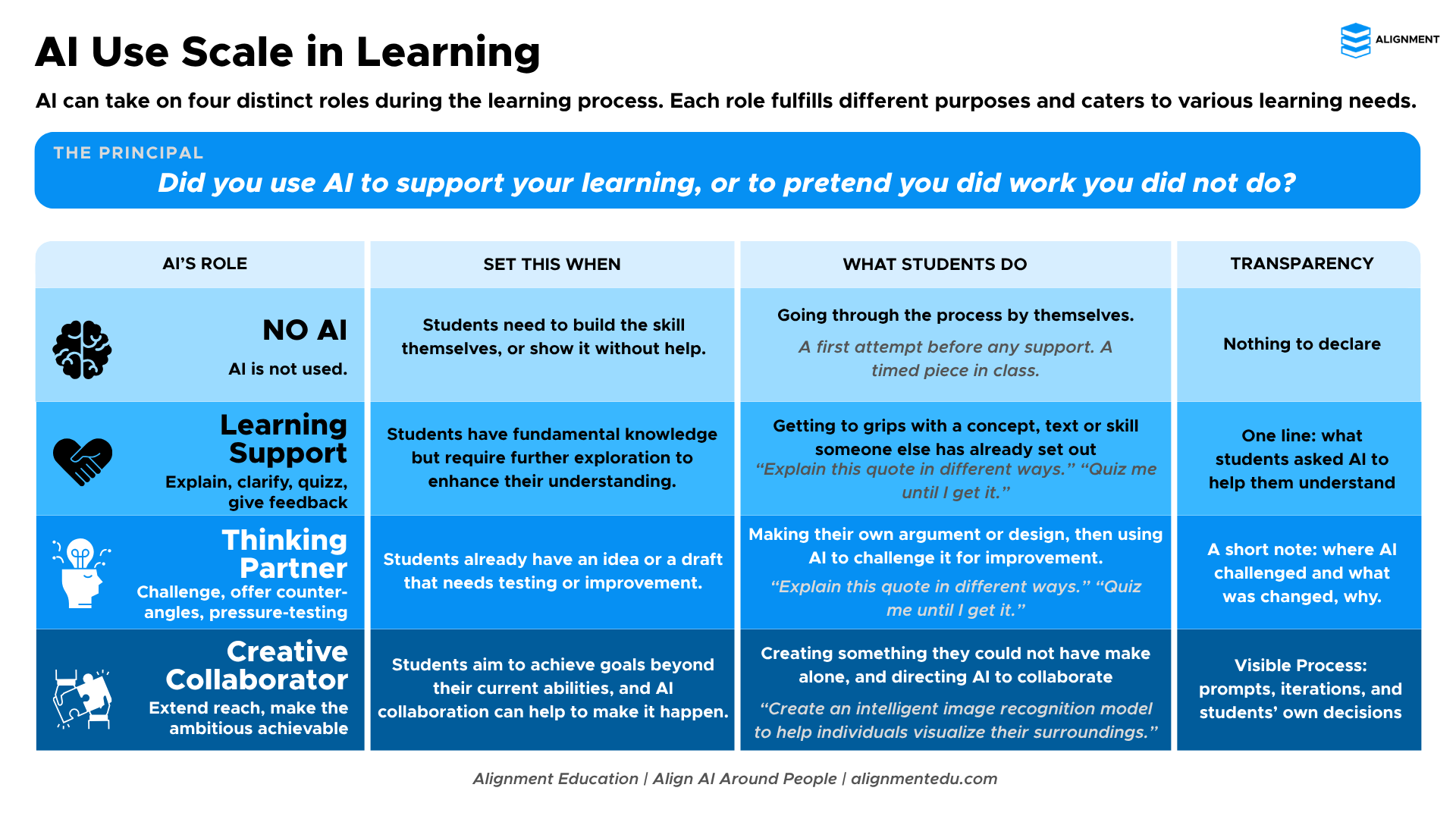
AI Use Scale in Learning (Shared Language)
Licensed under CC BY-NC-ND 4.0
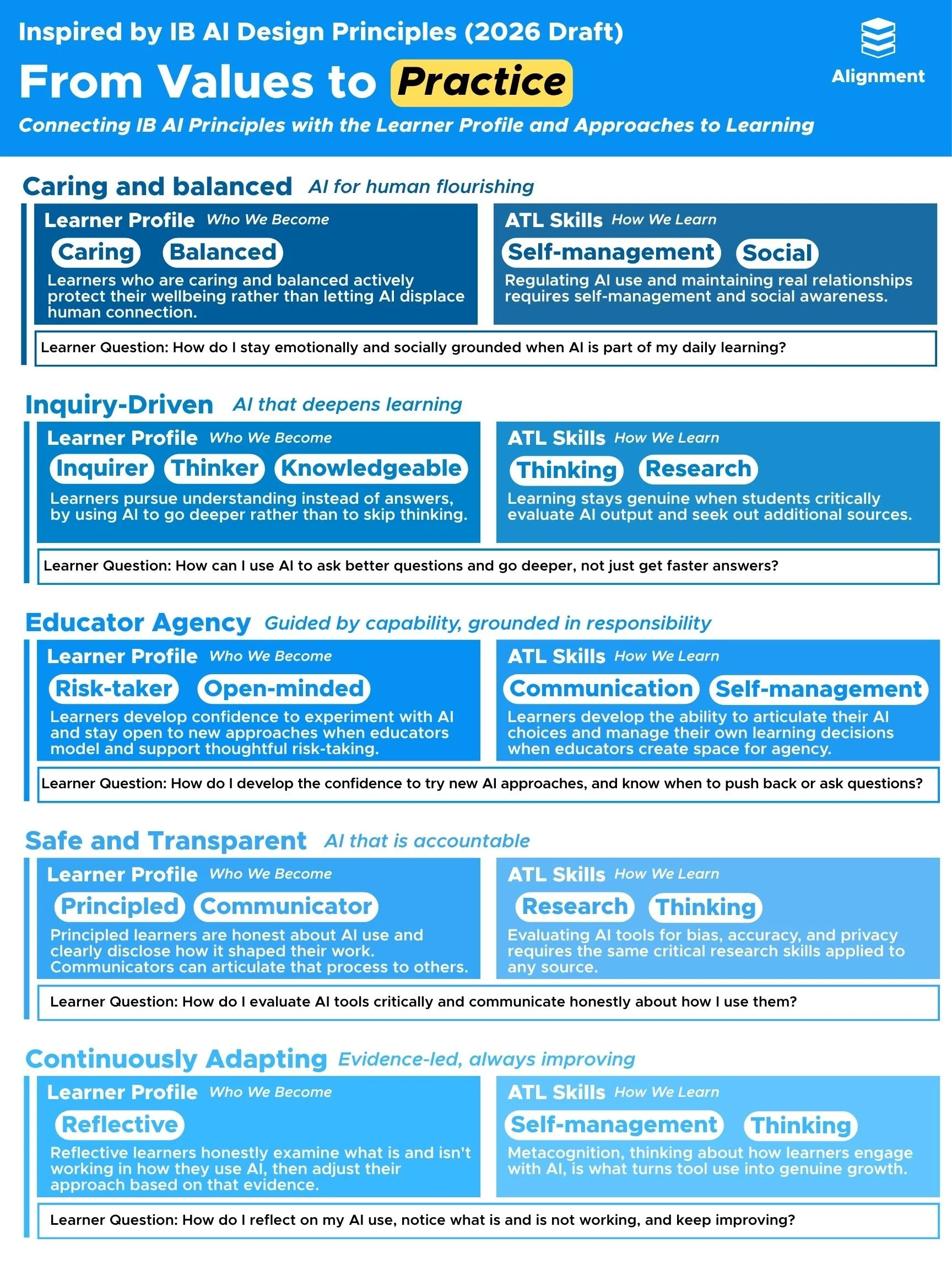
IB AI Design Principles (Drafted) in Practice
Inspired by the IB's 2026 draft AI Design Principles, these two companion resources translate the five principles into something teachers and students can use directly. From Values to Practice connects each principle to the IB Learner Profile and Approaches to Learning skills, with a reflection question students can ask themselves about their own AI use. IB AI Best Practices for the Classroom turns the same five principles into concrete teacher moves, three per principle, with a prompt question to ask before bringing AI into a lesson. Use them together to move from policy language to everyday practice.

Licensed under CC BY-NC-ND 4.0
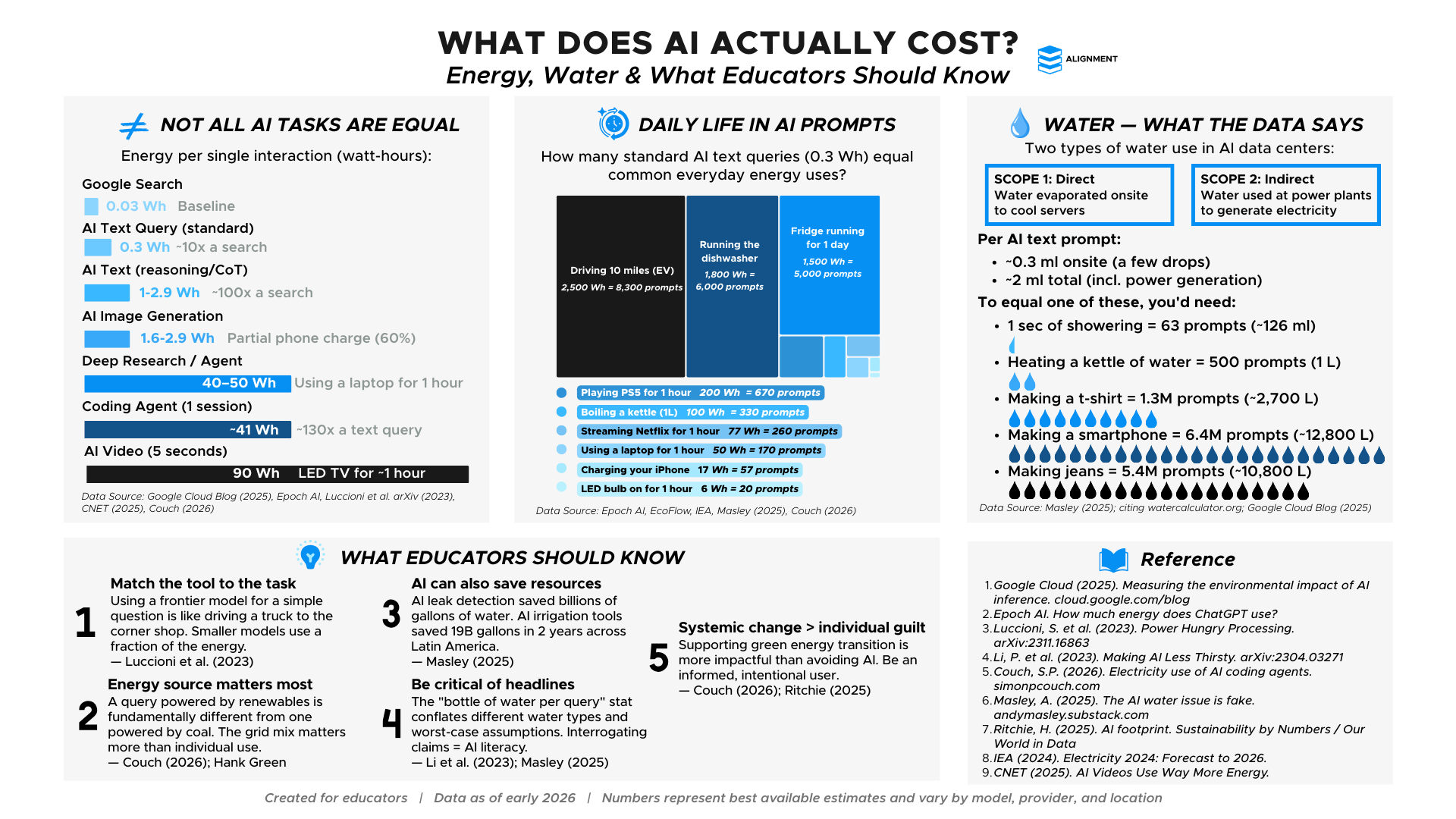
What Does AI Actually Cost?
Data as of early 2026 | Energy, Water & What Educators Should Know
Understanding the environmental footprint of artificial intelligence is a crucial component of modern AI literacy. To help unpack this complex topic, we are sharing "What Does AI Actually Cost?", a visual guide that breaks down the real energy and water consumption of various AI tasks.
This resource contextualizes the cost of generating AI text, images, and video by comparing it to everyday activities, such as driving an electric vehicle, running a fridge, or boiling a kettle. Designed specifically for educators and learners, the guide provides practical takeaways, like the importance of matching the size of the AI tool to your task and understanding how grid energy sources impact emissions. Ultimately, it aims to help educators and students look past sensational headlines and become informed, intentional users of technology.
Licensed under CC BY-NC-ND 4.0
AI Guidance Document That Fits Your Context
This Guidance Document Template is designed to assist educational institutions in creating their own policies for the responsible use of Artificial Intelligence. It provides a holistic framework that addresses both the opportunities of personalized learning and the challenges of ethics and privacy. With dedicated sections for all key stakeholders: including students, staff, and families. This adaptable resource ensures that schools can foster innovation while maintaining a safe, equitable, and human-centered learning environment. (Please note that this document is not a ready-to-use resource, schools need to adjust based on the unique context)

This image is generated by Gemini.
Licensed under CC BY-NC-ND 4.0
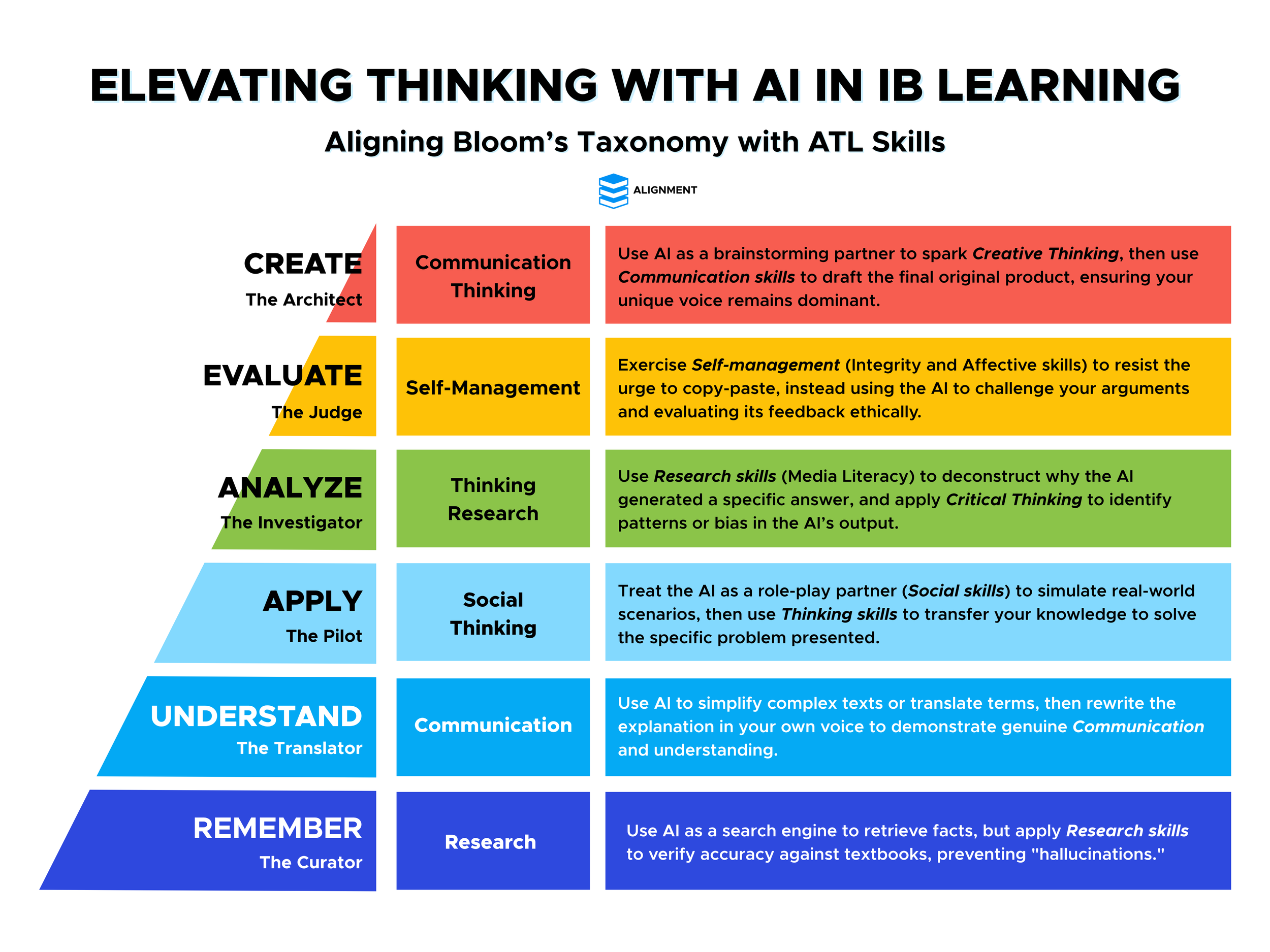
Elevating Thinking With AI in IB Learning
This visual framework bridges Bloom's Taxonomy with the IB's Approaches to Learning (ATL) Skills to show how AI can support student thinking at every cognitive level, rather than replace thinking. From using AI as a research tool at the "Remember" level to leveraging it as a brainstorming partner at the "Create" level, this resource helps educators guide students toward deeper, more intentional AI use that keeps their unique voice and critical thinking at the center of learning.
Licensed under CC BY-NC-ND 4.0
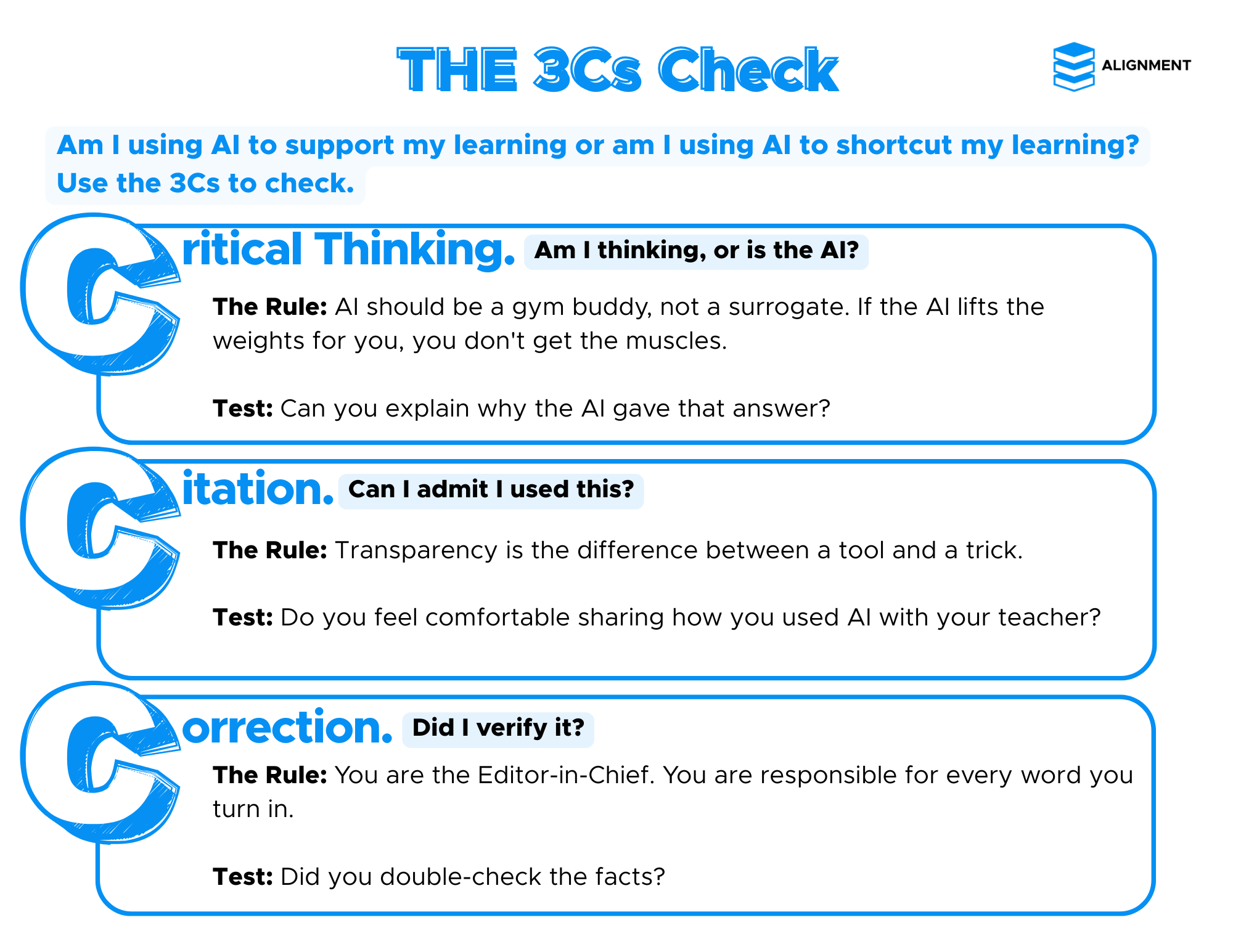
AI Responsible Use Frameworks For Learners
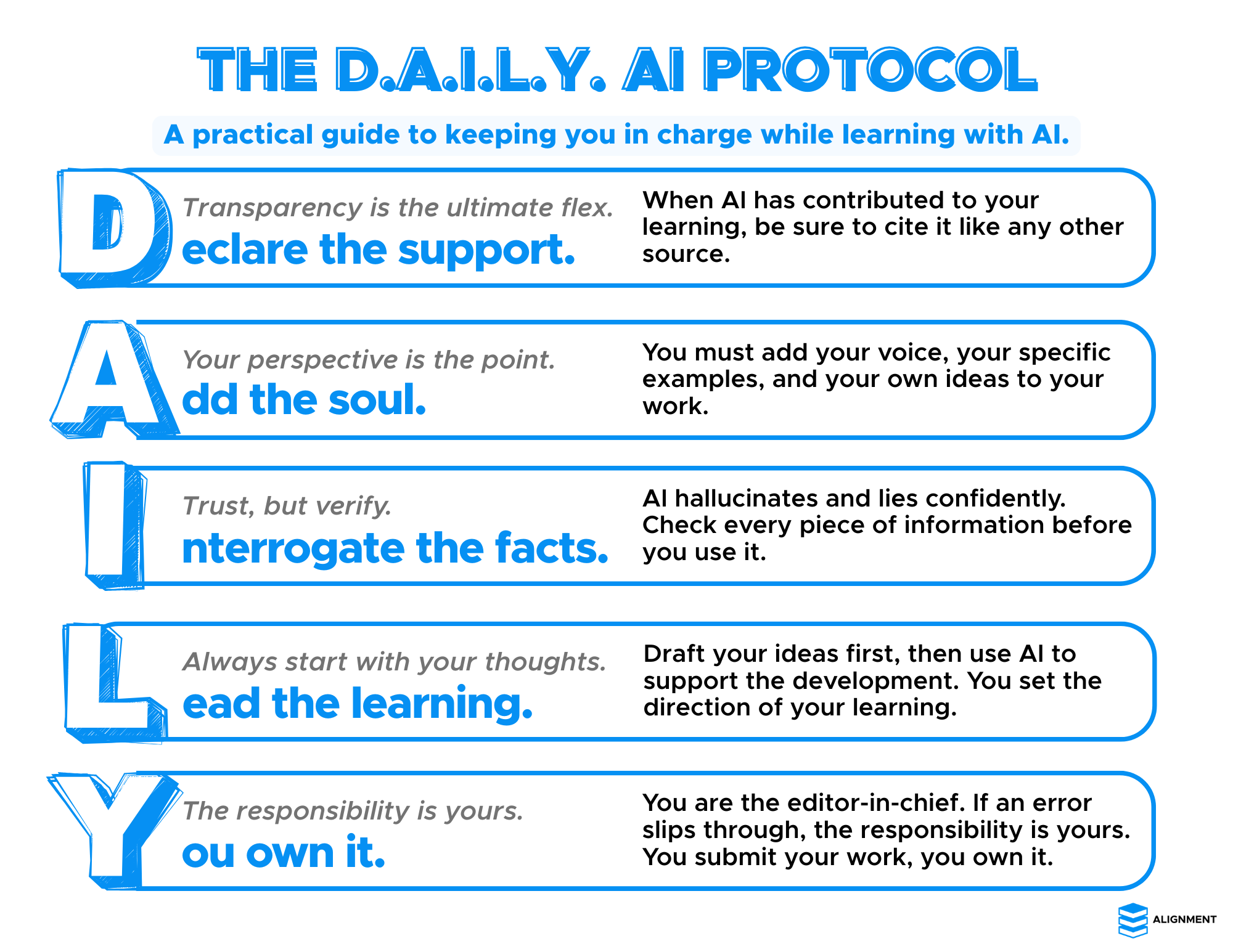
The 3Cs Check and The D.A.I.L.Y. AI Protocol give learners simple, memorable frameworks to self-assess their AI use. Whether pausing to reflect mid-task or building daily habits, these tools help learners stay in charge of their thinking, maintain transparency, and take ownership of their work.
Licensed under CC BY-NC-ND 4.0
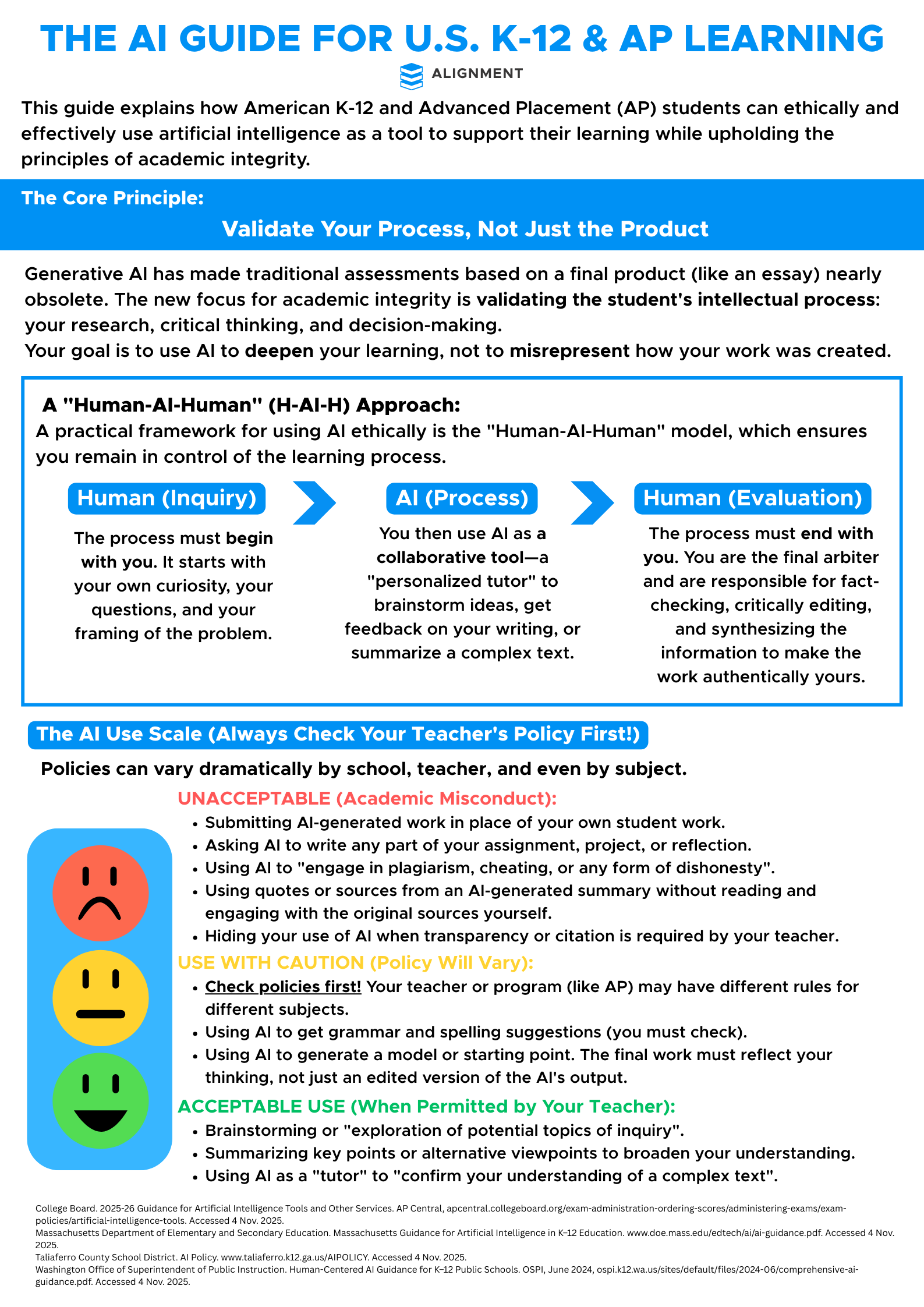
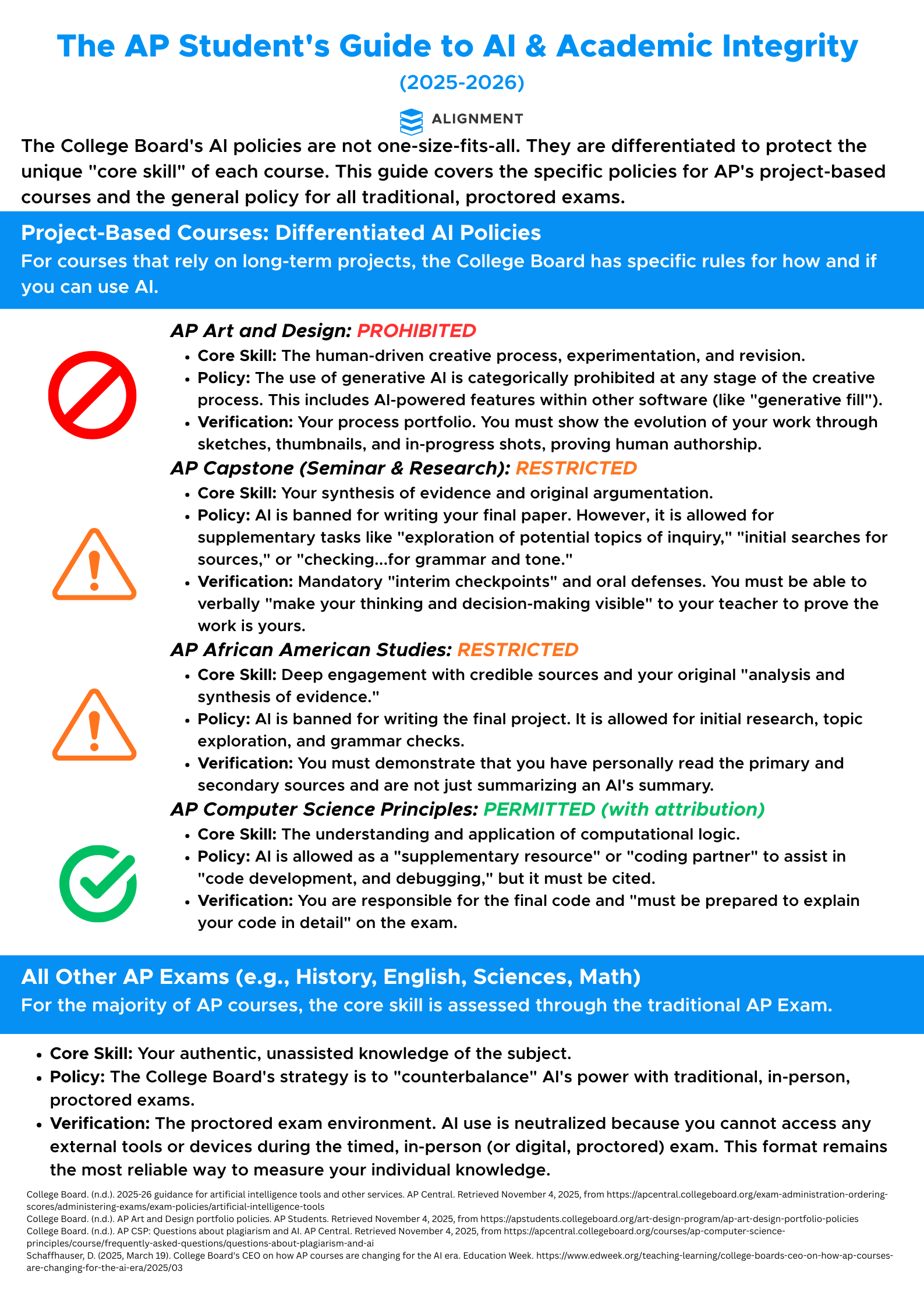
The AI Guide For U.S. K-12 & AP Learning
These guides provide an overview of the AI policies and academic integrity standards for U.S. K-12 and AP students for the 2025-2026 academic year. They outline the College Board’s differentiated regulations for specific project-based courses, such as AP Art and Design, Capstone, and Computer Science Principles. Additionally, the resources present the 'Human-AI-Human' framework and an AI use scale to clarify the distinction between appropriate assistance and academic misconduct.
Licensed under CC BY-NC-ND 4.0
The Five Core Elements of AI Fluency in IB Learning
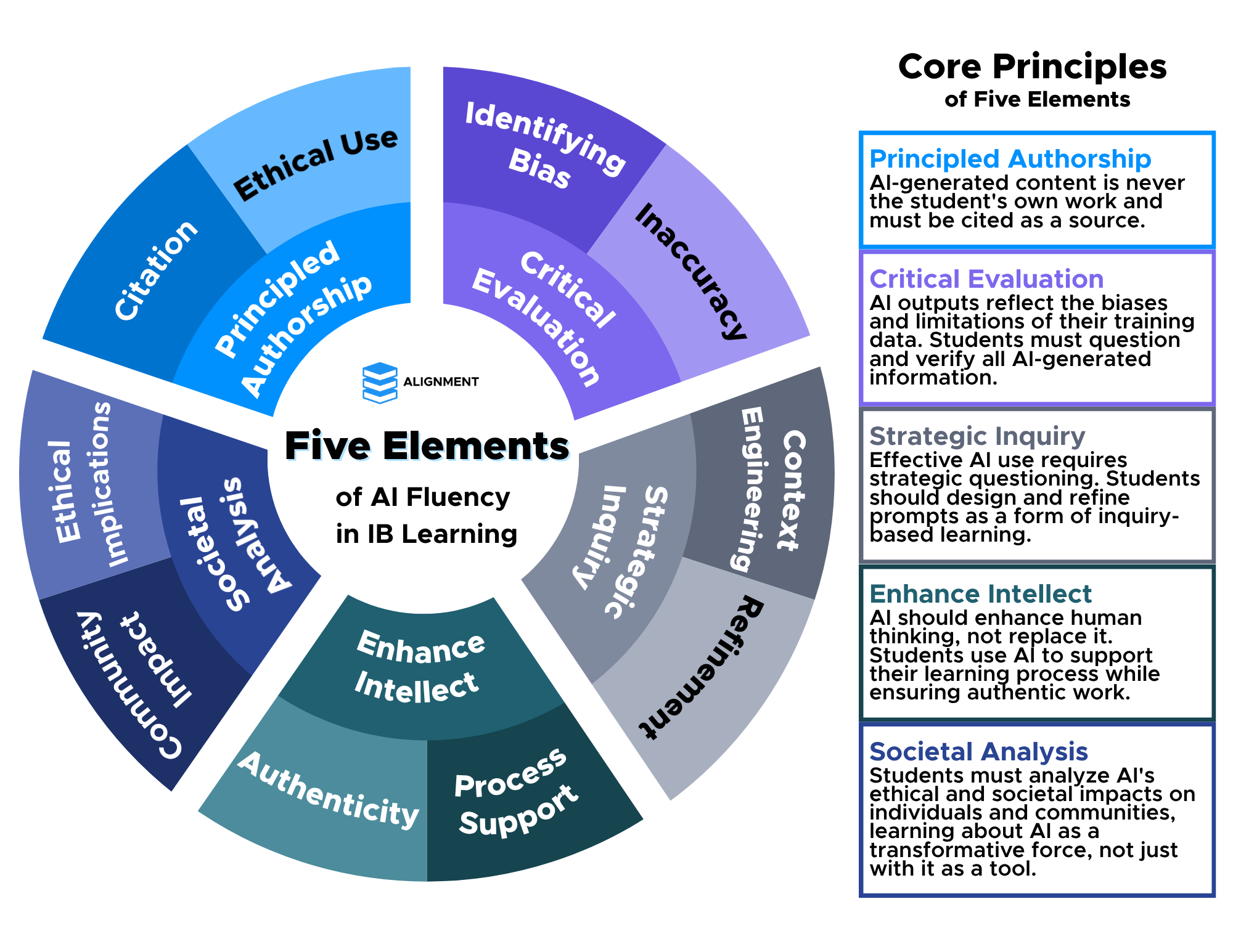
This visual guide distills key concepts from official IB guidance into five core elements for teaching AI fluency. Designed for educators in an inquiry-based context, it provides a clear and practical framework for empowering students to use AI tools critically, ethically, and effectively to enhance their learning.
Licensed under CC BY-NC-ND 4.0
A Guide To Learning Agency in The Age of AI


This resource provides a framework that designed to help teachers and students use artificial intelligence intentionally and reflectively. The guide's purpose is to ensure that learning objectives and skill development remain the primary focus during learning. It walks users through analyzing learning goals, choosing an appropriate path for AI engagement, and performing a final metacognitive check to maintain academic ownership.
Accompanying this framework is a detailed chatbot prompt that translates the guide into a conversational AI. This prompt can be used to create an interactive assistant that guides users through the planning and reflection processes outlined in the document.
Licensed under CC BY-NC-ND 4.0
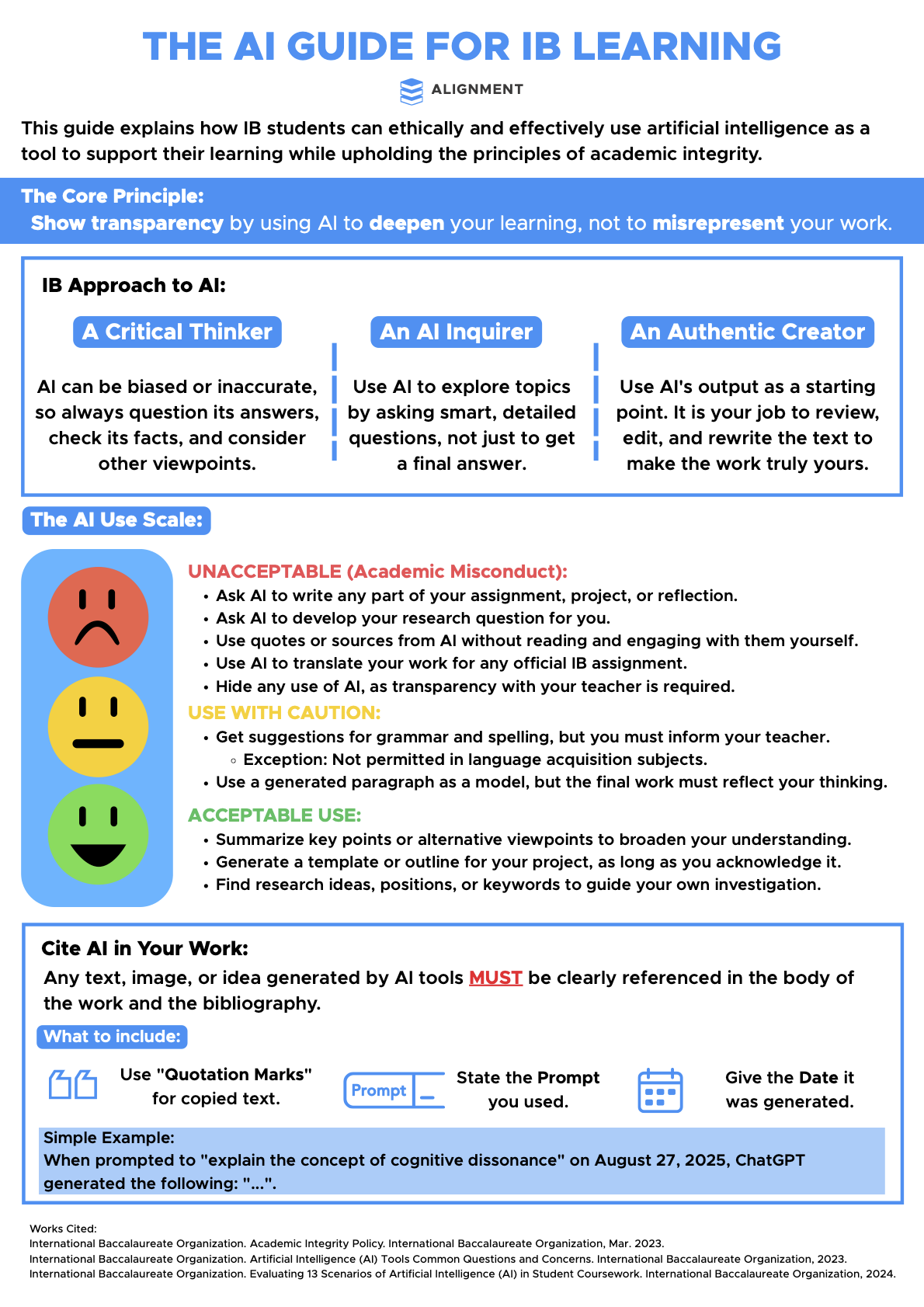
The Ultimate Guide in IB Learning
We've spent a lot of time thinking about how to guide students on using AI. While the IB has provided some excellent documents, we heard a clear need for a simple, visual framework for the day-to-day. So, we went through the current available documents from IB about Artificial Intelligence and synthesized it into a two-page guide. One for students in all year levels, one for DP students.
Our goal was to create a simple guide that teachers and students can use to gauge whether a use of AI is acceptable quickly, needs caution, or is a clear case of academic misconduct.

Licensed under CC BY-NC-ND 4.0
The Power of Play
AI Playground: Learn AI Literacy Through Play
We’re huge believers in the power of play to make complex topics accessible. That’s why we created "The AI Playground: Learn AI Literacy Through Play." It’s a simple 2-page guide with some of our favorite Google AI games and interactive experiments.
We’ve linked each one to age appropriateness, core AI concepts, and different learning levels to help make understanding AI an adventure for your students.


Licensed under CC BY-NC-ND 4.0
Your Voice Matters
Engage in AI Dialogue with C.A.R.E. Cards
We're excited to share our C.A.R.E. Conversation Cards, a tool we developed to help our community have meaningful conversations about AI, ensure that every voice can be heard. We've created different sets tailored for Parents, Leaders, and students/teachers, each exploring important questions across four areas: Changes, Applications, Readiness, and Ethics.
Our hope is that these cards provide a simple, engaging way for everyone to connect, share perspectives, and grow together as we navigate the evolving landscape of AI.


Licensed under CC BY-NC-ND 4.0
AI Literacy Curriculum Mapping For PYP & MYP


Licensed under CC BY-NC-ND 4.0
When IB Meets Artificial Intelligence


Licensed under CC BY-NC-ND 4.0
"AI in the Classroom: 13 IB-Inspired Scenarios for Learning" is a practical discussion guide created to help educators and students navigate the role of AI in education. Drawing inspiration from the IB’s Evaluating 13 Scenarios of AI in Student Coursework, this guide brings real classroom examples to life, encouraging meaningful conversations about how AI can shape teaching and learning. It’s a resource designed to support understanding and reflection in classrooms everywhere.
AI in the Classroom: 13 IB-Inspired Scenarios for Learning


Licensed under CC BY-NC-ND 4.0
Licensed under CC BY-NC-ND 4.0
AI Prompt Checklists For Students
Our commitment to supporting student learning is at the heart of everything we do as educators. This school year, we've seen a growing interest in using AI in classrooms, especially in ways that encourage ethical and thoughtful use. One exciting opportunity is helping students tap into their creativity while using AI chatbots as partners to deepen their thinking.
We've noticed, though, that many students aren’t sure how to use AI effectively. To address this, we created two simple prompt checklists to guide their day-to-day interactions with AI in the classroom.
With the acronyms "C.R.E.A.T.E." and "S.M.A.R.T.," these checklists help students craft more intentional prompts for AI chatbots and image generators.


Licensed under CC BY-NC-ND 4.0